“Is there something like [INSERT PRODUCT], but cheaper?” - What a loaf of bread can teach us about the cost of educational technology
I baked a loaf of bread recently. Or rather, I attempted to.
A quick trip to the supermarket seemed like the obvious starting point. Flour, yeast, a few other bits. Nothing extravagant. Yet by the time I had picked up the cheapest ingredients on the shelf, I had already spent more than the price of the supermarket’s own-brand luxury loaf.
The calculation does not stop there, of course. A bag of flour might produce several loaves, and the yeast will certainly stretch further. Equipment comes into the equation as well. In this particular scenario, I am generously assuming I already own a baking tray and am not including that in the cost. The oven, however, still needs to run for a couple of hours. Energy is not free.
There is also the small matter of actually knowing how to make the bread. I am no expert baker. Producing something edible relies on at least a little knowledge, a bit of practice, and a willingness to accept that the first attempt may not look quite like the glossy photograph on the recipe page.
At some point during this process a rather obvious conclusion begins to form. Someone else has already done all of this work. They have bought the ingredients in bulk, developed the recipe, refined the process, invested in the equipment, and produced a loaf that is ready to eat. Suddenly the supermarket bread starts to look like a remarkably efficient solution.
So, with that thought in mind, I abandoned my baking ambitions and went out to buy a loaf that was already made.
This small domestic moment sits quietly in the background whenever I hear conversations about the cost of educational technology. Because very often the discussion focuses only on the finished product sitting on the shelf, while everything that went into producing it remains largely invisible.
What often frustrates me in some conversations is the expectation that educational tools should be cheap, or ideally free. Questions are often framed around finding “something similar but cheaper”, which sometimes reflects a misunderstanding about what schools are actually purchasing.
Many people understandably look only at the finished product in front of them. It can feel a little like seeing that loaf already sitting in a bakery window. The loaf exists, it looks ready to consume, and it is easy to assume the cost should simply reflect the ingredients.
What tends to be invisible is everything that sits behind that finished product.
With educational technology in particular, the visible tool is often the smallest part of the real cost. There are hosting costs so that the platform actually exists online and works reliably every day. There are developers building and maintaining the software, updating it when operating systems change, fixing problems, improving accessibility, and ensuring it runs across different devices used in schools. There are support teams responding when something does not work, or when staff need help implementing the tool effectively.
Training is another area that is frequently misunderstood. The cost of training a school to use a tool does not reduce because the school intends to use it with one or two pupils rather than a hundred. The preparation time, the expertise of the trainer, the delivery of the session, and the follow up support are essentially the same. From the provider’s perspective, supporting a school that uses a tool with two pupils can involve almost exactly the same investment of time as supporting a school that embeds it across the whole establishment.
This is also why the “small school” argument can sometimes be misleading. A school of 200 pupils may feel small internally, but from the perspective of a company providing a platform or program, the infrastructure required to support that school is often not fundamentally different from that required for a larger one.

Sustainability is another aspect that is rarely discussed. Free or extremely cheap tools often begin as passion projects created by individuals or very small teams. In the early stages they can appear highly attractive to schools because there is little or no financial commitment involved. The difficulty is that maintaining software over time requires ongoing funding. Without a sustainable model, founders eventually reach the point where they can no longer afford to continue. The result is that tools quietly disappear, become unstable, or remain online but gradually fall out of date as operating systems change and security expectations increase. Schools that have come to rely on them can suddenly find themselves without a viable option.
There is also the question of research and development. Educational tools rarely appear overnight. Years of work often go into exploring the need, testing approaches, refining the design, working with schools, and ensuring that what is produced genuinely supports learning rather than simply looking impressive. By the time a product reaches a school, an enormous amount of unseen development has already taken place.
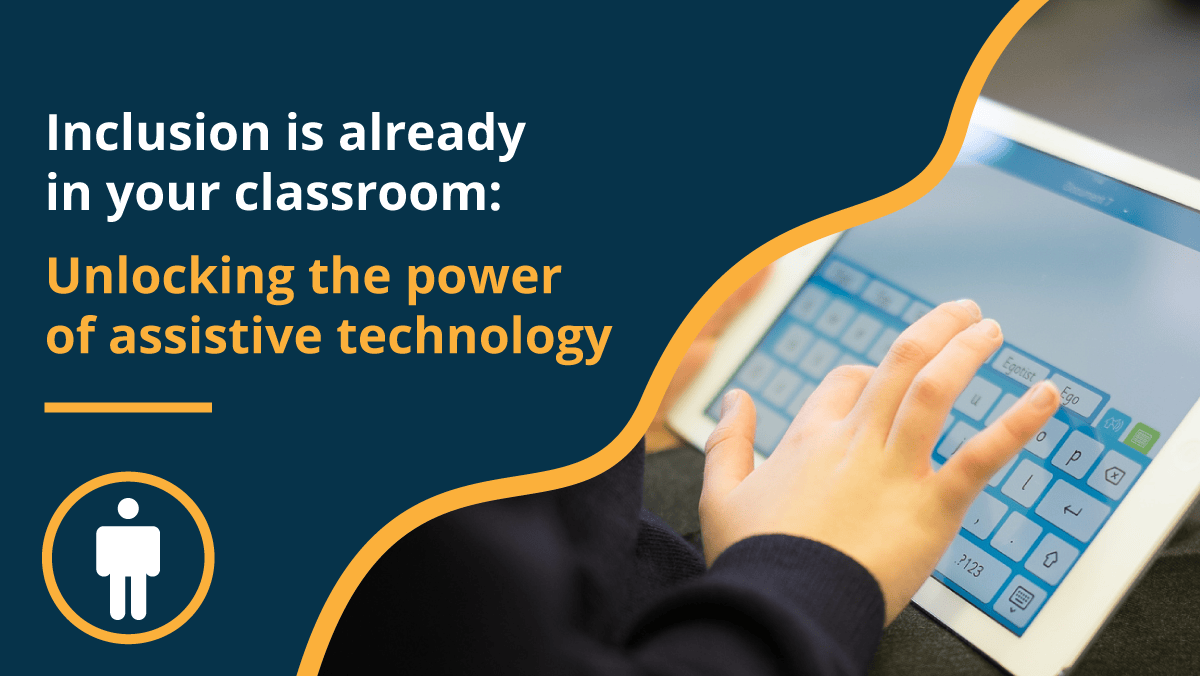
Perhaps the bigger issue sitting underneath all of this is how assistive and supportive technologies are viewed in schools. When a tool is seen as something designed for “one or two pupils”, every cost will feel disproportionate. It becomes a specialist purchase for a very small group of children.
When the same tool is understood as part of universal classroom provision and adaptive teaching, the conversation changes quite dramatically. Tools that support writing, organisation, reading access, communication, or planning rarely benefit only a handful of pupils. They often support a much wider group of learners who struggle quietly without a label, alongside those with identified needs.
When supportive technologies begin to be viewed as part of the everyday classroom toolkit rather than a niche intervention, the conversation moves away from “What is the cheapest alternative?” and towards “What provision will genuinely support the widest range of pupils in this school?”. At that point, the investment tends to make far more sense.
Which brings me back to the loaf of bread.
It is easy to stand in the supermarket and question why one loaf costs more than another, or why anyone would buy a ready-made loaf at all when flour and yeast are available. Yet the loaf on the shelf represents far more than the ingredients. It reflects the knowledge of how to make it properly, the equipment that produced it, the energy that baked it, and the time invested in refining the process so that the result is reliable every time.
There is also the matter of longevity. A professionally produced loaf tends to keep its quality for longer. The process has been refined, the ingredients balanced, the packaging designed to preserve it. My homemade attempt, admirable though the effort might be, is far more likely to start going stale after a day or two.
Educational technology works in a similar way. What schools see is the finished loaf sitting on the shelf. What they are actually buying is the infrastructure, expertise, maintenance, and ongoing development that allow that product to keep working reliably over time. The value is not simply that the tool exists today, but that it will still be functioning, supported, and improved next year and the year after.
In that sense, the investment is not just in the loaf itself, but in the reassurance that it will not go stale the moment you start relying on it.

Abigail is a highly respected SEN expert with over 25 years of experience in Special Educational Needs and Disabilities (SEND). As the founder of SENDCo Solutions and SENsible SENCO, Abigail is widely regarded as an expert in the field. Her work focuses on enhancing SEN provision, supporting SENCos, and improving outcomes for pupils with additional needs.